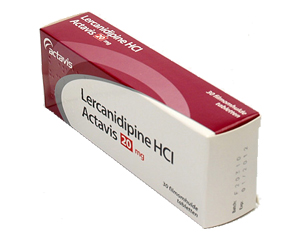
Lercanidipine
Incl. online consultation, medicine and discreet delivery
View Options
The medical information on this site is provided for educational purposes. It does not replace a face-to-face consultation with your GP or specialist. Always follow the advice of your prescribing doctor and read the patient information leaflet supplied with your medication.
Choose Your Medicine
Select dosage and quantity
Online Consultation
Reviewed by a qualified physician
Fast, Discreet Delivery
Delivered to your door
Medical Information
About This Medicine
Lercanidipine is a third-generation dihydropyridine calcium channel blocker prescribed for the treatment of mild to moderate essential hypertension.
It acts by selectively blocking L-type calcium channels in vascular smooth muscle, causing arterial vasodilatation and a reduction in peripheral vascular resistance.
This lowers blood pressure effectively while producing minimal effects on cardiac contractility or conduction.
Lercanidipine is highly lipophilic, which allows it to accumulate in cell membranes and produce a slow onset and prolonged duration of action.
This pharmacokinetic profile results in a smooth, sustained antihypertensive effect with less reflex tachycardia and fewer episodes of flushing or ankle oedema compared with earlier dihydropyridines such as nifedipine or amlodipine.
Lercanidipine is taken once daily and can be used as monotherapy or in combination with other antihypertensive agents including ACE inhibitors, angiotensin receptor blockers, beta-blockers, and thiazide diuretics.
It is generally well tolerated and provides reliable 24-hour blood pressure control.
Usage & Dosage
Take one tablet once daily in the morning, at least 15 minutes before breakfast. Swallow whole with water. Do not take with grapefruit juice, as this can increase drug levels.
Take at the same time each day to maintain consistent blood pressure control. Do not stop the medication abruptly.
If you miss a dose, take it when you remember unless it is near the time of the next dose.
Starting dose: 10 mg once daily. If blood pressure is not adequately controlled after at least two weeks, the dose may be increased to 20 mg once daily. Maximum dose: 20 mg daily.
No dose adjustment is needed for mild to moderate renal impairment, but use with caution in severe renal impairment. Contraindicated in severe hepatic impairment.
Side Effects
Common (1 in 10 to 1 in 100): headache, peripheral oedema (less frequent than with amlodipine), flushing, palpitations. Uncommon: dizziness, nausea, epigastric pain, rash, fatigue, myalgia, polyuria.
Rare: angina, syncope, gingival hyperplasia (very rare, more commonly associated with other dihydropyridines).
The slow onset of vasodilatation means that side effects such as flushing and ankle swelling tend to be milder than with older agents in this class.
Warnings & Precautions
Avoid grapefruit and grapefruit juice during treatment, as CYP3A4 inhibition increases lercanidipine plasma levels.
Use with caution in patients with left ventricular dysfunction, sick sinus syndrome (if no pacemaker), or moderate renal impairment.
Concurrent use with strong CYP3A4 inhibitors (ketoconazole, itraconazole, ritonavir) is contraindicated. Alcohol may enhance the antihypertensive effect.
Monitor blood pressure regularly during dose titration.
Contraindications
Contraindicated in severe hepatic impairment, untreated congestive heart failure, unstable angina, left ventricular outflow tract obstruction (including aortic stenosis), within one month of a myocardial infarction, pregnancy, breastfeeding, and concomitant use with potent CYP3A4 inhibitors or ciclosporin.
Also contraindicated in known hypersensitivity to lercanidipine or other dihydropyridines.