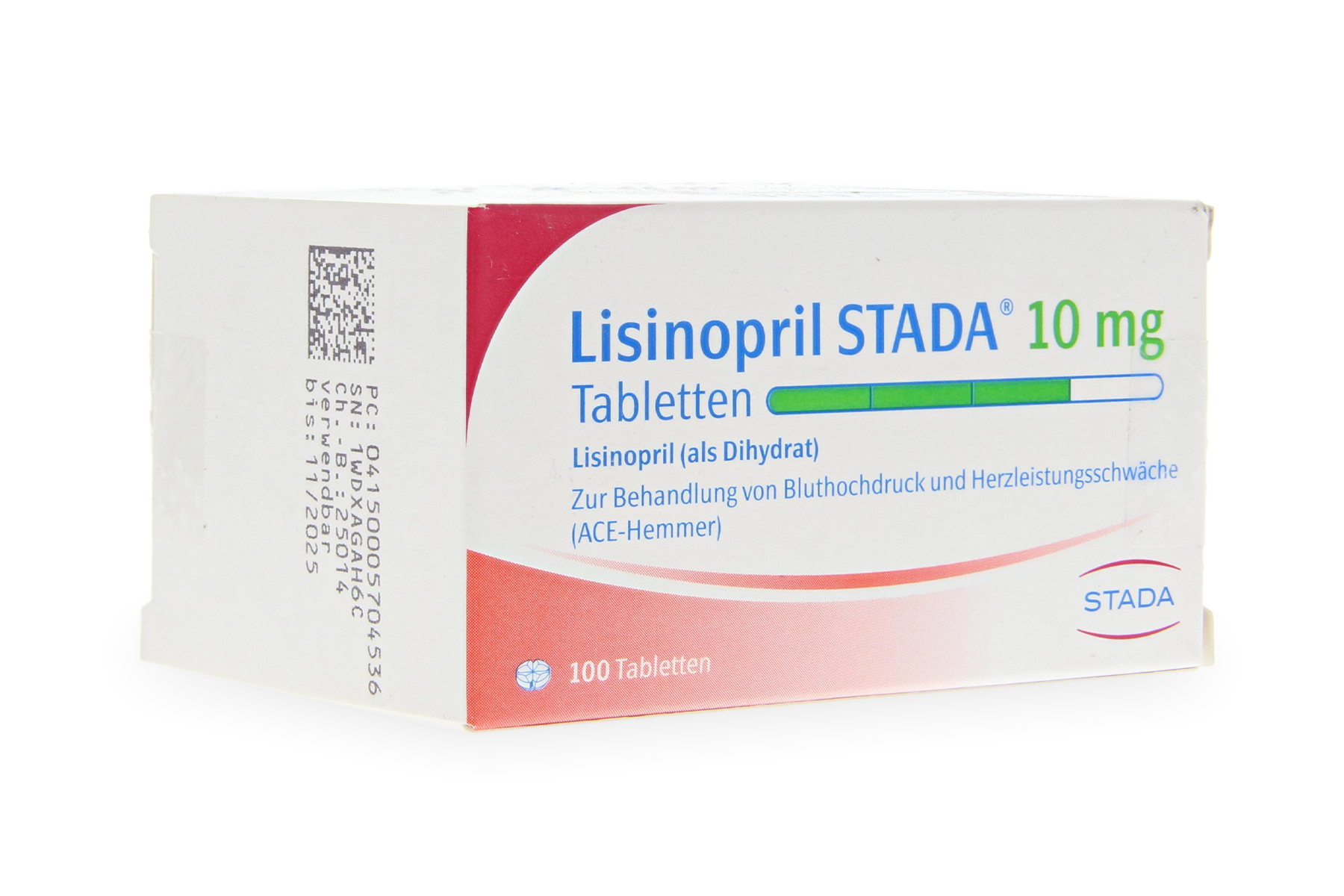
Lisinopril
Incl. online consultation, medicine and discreet delivery
View Options
The medical information on this site is provided for educational purposes. It does not replace a face-to-face consultation with your GP or specialist. Always follow the advice of your prescribing doctor and read the patient information leaflet supplied with your medication.
Choose Your Medicine
Select dosage and quantity
Online Consultation
Reviewed by a qualified physician
Fast, Discreet Delivery
Delivered to your door
Medical Information
About This Medicine
Lisinopril is an angiotensin-converting enzyme (ACE) inhibitor widely prescribed for the treatment of hypertension, heart failure, and as secondary prevention following myocardial infarction.
It works by blocking the conversion of angiotensin I to angiotensin II, a potent vasoconstrictor, thereby reducing peripheral vascular resistance and lowering blood pressure.
In addition to its antihypertensive effect, lisinopril reduces aldosterone secretion, which promotes sodium and water excretion.
It also has cardioprotective and renoprotective properties, making it a cornerstone treatment for patients with heart failure, diabetic nephropathy, and chronic kidney disease with proteinuria.
Unlike many other ACE inhibitors, lisinopril is not a prodrug and does not require hepatic activation, which can be advantageous in patients with liver disease.
Lisinopril is taken once daily and reaches peak effect within six to eight hours. Blood pressure reduction is maintained over 24 hours, supporting good adherence with a simple dosing regimen.
Usage & Dosage
Take one tablet once daily at approximately the same time each day, with or without food. Swallow whole with water.
Do not stop taking lisinopril without medical advice, as abrupt discontinuation may lead to rebound hypertension.
If you are starting treatment for heart failure, the initial dose will be low and increased gradually under medical supervision.
Report any persistent dry cough, dizziness, or swelling of the face, lips, or tongue to your doctor immediately.
Hypertension: initial dose 10 mg once daily, adjusted according to blood pressure response. Usual maintenance dose 20 mg once daily; maximum 80 mg. Heart failure: initial dose 2.
5 mg once daily, titrated upwards at intervals of at least two weeks to a target dose of 20 to 35 mg once daily.
Post-myocardial infarction: start with 5 mg within 24 hours, then 5 mg at 24 hours, 10 mg at 48 hours, and maintain at 10 mg daily. Reduce starting dose in renal impairment.
Side Effects
Common (1 in 10 to 1 in 100): dizziness, headache, dry persistent cough (affects up to 10% of patients), diarrhoea, fatigue.
Uncommon: symptomatic hypotension (particularly first-dose), rash, taste disturbance, elevated serum creatinine and potassium.
Rare but serious: angioedema (swelling of the face, lips, tongue, or throat, which requires emergency treatment), acute renal failure, neutropenia.
The dry cough is a class effect and resolves on discontinuation; patients who cannot tolerate it are usually switched to an angiotensin receptor blocker.
Warnings & Precautions
Monitor renal function and serum potassium, particularly in patients with renal impairment, diabetes, or those taking potassium-sparing diuretics or supplements.
First-dose hypotension is more likely in patients who are volume-depleted (for example, those on diuretics); consider withholding or reducing the diuretic for a few days before starting lisinopril.
ACE inhibitors should be discontinued immediately if angioedema occurs. Patients of African-Caribbean origin may have a reduced antihypertensive response and a higher incidence of angioedema.
Contraindications
Contraindicated in pregnancy (teratogenic, particularly in the second and third trimesters), bilateral renal artery stenosis, history of angioedema related to previous ACE inhibitor therapy, hereditary or idiopathic angioedema, and known hypersensitivity to lisinopril or any other ACE inhibitor.
Must not be used concomitantly with aliskiren in patients with diabetes or renal impairment (eGFR below 60).