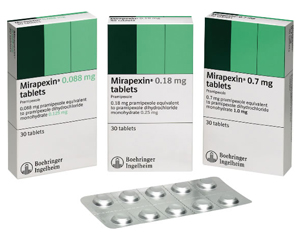
Mirapexin
Incl. online consultation, medicine and discreet delivery
View Options
The medical information on this site is provided for educational purposes. It does not replace a face-to-face consultation with your GP or specialist. Always follow the advice of your prescribing doctor and read the patient information leaflet supplied with your medication.
Choose Your Medicine
Select dosage and quantity
Online Consultation
Reviewed by a qualified physician
Fast, Discreet Delivery
Delivered to your door
Medical Information
About This Medicine
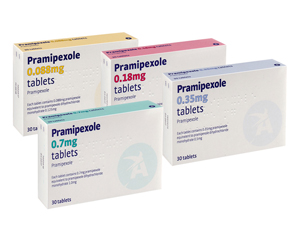
Mirapexin contains pramipexole, a non-ergot dopamine agonist used in the treatment of Parkinson's disease and moderate to severe restless legs syndrome (RLS).
In Parkinson's disease, it may be used as monotherapy in early disease or as an adjunct to levodopa in more advanced stages.
Pramipexole has a high affinity for dopamine D3 receptors, which are concentrated in brain areas involved in mood and motivation, giving it potential benefits for the non-motor symptoms of Parkinson's disease.
In Parkinson's disease, pramipexole supplements the brain's diminished dopamine activity, improving motor symptoms such as tremor, rigidity, and bradykinesia.
In restless legs syndrome, it alleviates the uncomfortable sensations and urge to move that disrupt sleep. Mirapexin is available in both immediate-release and prolonged-release formulations.
The prolonged-release tablets allow once-daily dosing, which can simplify treatment regimens and improve adherence.
The immediate-release form is taken three times daily for Parkinson's disease or once daily for RLS.
Usage & Dosage
For Parkinson's disease (immediate-release): take three times daily with or without food.
For Parkinson's disease (prolonged-release): take once daily at approximately the same time, swallowed whole without crushing or chewing.
For restless legs syndrome: take one dose two to three hours before bedtime.
Do not stop Mirapexin suddenly, as abrupt withdrawal may cause a condition known as dopamine agonist withdrawal syndrome, with symptoms including anxiety, depression, pain, and fatigue.
Any dose changes should be made gradually under medical supervision.
Parkinson's disease (immediate-release): starting dose 0.088 mg three times daily, increased every five to seven days to a maximum of 1.1 mg three times daily. Prolonged-release: starting dose 0.
26 mg once daily, increased at intervals of at least five days. RLS: starting dose 0.
088 mg once daily, two to three hours before bedtime, increasing if needed every four to seven days to a maximum of 0.54 mg daily. Dose reduction is required in moderate to severe renal impairment.
Side Effects
Common side effects include nausea, dizziness, drowsiness, insomnia, and dyskinesia (involuntary movements, primarily when used with levodopa).
Hallucinations may occur, particularly in elderly patients. Orthostatic hypotension (a drop in blood pressure on standing) can cause light-headedness.
Impulse control disorders, including pathological gambling, hypersexuality, compulsive eating, and compulsive shopping, are a recognised class effect of dopamine agonists.
Sudden sleep episodes without warning drowsiness have been reported.
Warnings & Precautions
Mirapexin may cause sudden onset of sleep, which poses a risk when driving or operating machinery. Patients must be warned about this possibility.
Monitor closely for impulse control disorders and advise patients and carers to report any behavioural changes.
Hallucinations may occur, particularly in elderly patients or those with advanced Parkinson's disease. Dose reduction is necessary in renal impairment. Do not withdraw the medication abruptly.
Ophthalmological monitoring may be considered, as visual disturbances have been reported.
Contraindications
Mirapexin is contraindicated in patients with known hypersensitivity to pramipexole or any excipient.
No other absolute contraindications are listed, but extreme caution is required in patients with severe renal impairment (creatinine clearance below 20 ml/min), severe cardiovascular disease, and psychotic disorders.