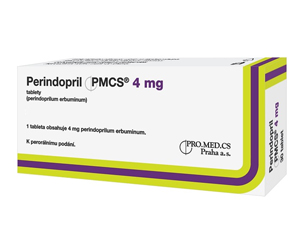
Perindopril
Incl. online consultation, medicine and discreet delivery
View Options
The medical information on this site is provided for educational purposes. It does not replace a face-to-face consultation with your GP or specialist. Always follow the advice of your prescribing doctor and read the patient information leaflet supplied with your medication.
Choose Your Medicine
Select dosage and quantity
Online Consultation
Reviewed by a qualified physician
Fast, Discreet Delivery
Delivered to your door
Medical Information
About This Medicine
Perindopril is a long-acting angiotensin-converting enzyme (ACE) inhibitor used in the management of hypertension, stable coronary artery disease, and symptomatic heart failure.
As a prodrug, it is hydrolysed in the liver to its active metabolite perindoprilat, which inhibits ACE and reduces the formation of angiotensin II, a potent vasoconstrictor.
By lowering angiotensin II levels, perindopril causes vasodilatation, reduces aldosterone secretion, and decreases both preload and afterload on the heart.
It has been shown in large-scale trials (EUROPA, PROGRESS) to reduce cardiovascular events in patients with stable coronary artery disease and to lower the risk of recurrent stroke when combined with indapamide.
It also has renoprotective properties, making it a suitable choice for patients with diabetic nephropathy or chronic kidney disease.
Perindopril is taken once daily, usually in the morning. It is available in two salt forms: perindopril erbumine and perindopril arginine, which differ in dose equivalence.
Prescribers should be aware of which salt is being dispensed.
Usage & Dosage
Take one tablet once daily in the morning before food, as food reduces the conversion of perindopril to its active form. Swallow whole with water.
If you miss a dose, take it as soon as you remember that day; skip it if it is almost time for the next dose. Do not stop the medication abruptly.
If you develop swelling of the face, lips, or throat, discontinue immediately and seek emergency medical attention.
Hypertension (erbumine salt): initial dose 4 mg once daily, increased after one month to 8 mg if needed. Heart failure: initial dose 2 mg once daily, increased to 4 mg once daily.
If using the arginine salt, 2.5 mg equates to approximately 2 mg of the erbumine salt, and 5 mg equates to 4 mg.
Reduce starting dose in elderly patients (2 mg erbumine) and in renal impairment (dose adjustments based on creatinine clearance).
Side Effects
Common: headache, dizziness, dry cough (up to 12% of patients), upper respiratory symptoms, abdominal discomfort, nausea, dyspepsia.
Uncommon: rash, visual disturbance, muscle cramps, dysgeusia (taste disturbance), hyperkalaemia, and rises in serum creatinine. Rare but serious: angioedema (occurs in approximately 0.1 to 0.
5% of patients and requires immediate discontinuation), symptomatic hypotension, hepatic dysfunction, blood dyscrasias. The cough is a class effect and resolves on withdrawal.
Warnings & Precautions
Monitor blood pressure, renal function, and serum potassium after initiation and after dose increases. First-dose hypotension is more common in patients who are volume-depleted.
Concurrent use with potassium-sparing diuretics, potassium supplements, or NSAIDs requires close monitoring. ACE inhibitors may cause hyperkalaemia, especially in renal impairment or diabetes.
Discontinue immediately if angioedema is suspected. African-Caribbean patients may have reduced efficacy and increased angioedema risk.
Contraindications
Contraindicated in pregnancy (at all stages; switch to a safe alternative before conception), bilateral renal artery stenosis, history of ACE inhibitor-related angioedema, hereditary or idiopathic angioedema, and concomitant use with sacubitril-valsartan (wait at least 36 hours after discontinuing one before starting the other).
Must not be co-administered with aliskiren in diabetic or renally impaired patients.