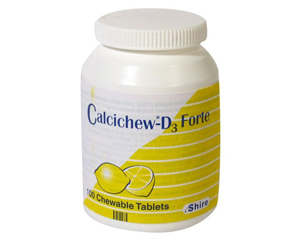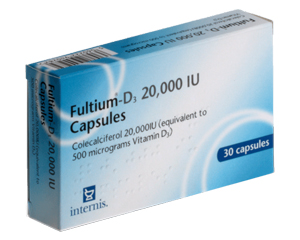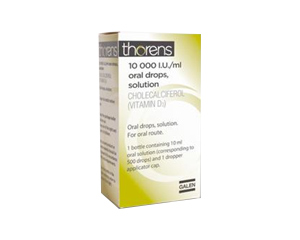
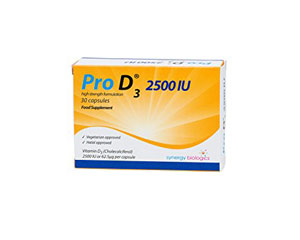
ProD3
Incl. online consultation, medicine and discreet delivery
View Options
The medical information on this site is provided for educational purposes. It does not replace a face-to-face consultation with your GP or specialist. Always follow the advice of your prescribing doctor and read the patient information leaflet supplied with your medication.
Choose Your Medicine
Select dosage and quantity
Online Consultation
Reviewed by a qualified physician
Fast, Discreet Delivery
Delivered to your door
Medical Information
About This Medicine
Pro-D3 is a pharmaceutical-grade vitamin D3 (colecalciferol) supplement available in various strengths, used to prevent and treat vitamin D deficiency and insufficiency.
Vitamin D plays a critical role in calcium and phosphate homeostasis, bone mineralisation, immune regulation, and muscle function.
Vitamin D deficiency is widespread, particularly in populations living at northern latitudes where UVB radiation is insufficient for cutaneous synthesis during autumn and winter.
Individuals with darker skin pigmentation, those who spend limited time outdoors, people who cover their skin for cultural or medical reasons, and those with malabsorption syndromes are at particular risk.
Pro-D3 provides colecalciferol in a range of strengths suitable for both loading and maintenance therapy.
Unlike ergocalciferol (vitamin D2), colecalciferol is the naturally occurring form produced in human skin and is considered more effective at raising and maintaining serum 25-hydroxyvitamin D levels.
Usage & Dosage
Take once daily with a main meal, ideally one containing dietary fat to enhance absorption. Swallow capsules whole with water.
For liquid formulations, measure the dose carefully using the dropper provided. Consistency is important - take at the same time each day.
Your doctor may prescribe an initial loading regimen before switching to a maintenance dose.
Maintenance: 800-4,000 IU daily depending on the degree of deficiency and individual risk factors. Loading dose for deficiency: typically 50,000 IU weekly for 6 weeks, followed by maintenance dosing.
Serum 25-hydroxyvitamin D levels should be checked after 3-6 months to confirm adequacy of replacement. Target serum level: above 50 nmol/L.
Side Effects
At recommended doses, side effects are very rare.
Prolonged excessive intake can cause hypercalcaemia, presenting as nausea, vomiting, excessive thirst, frequent urination, constipation, confusion, and weakness.
Very high doses over extended periods may lead to soft tissue calcification and nephrocalcinosis. At standard maintenance doses, the safety profile is excellent and long-term use is well established.
Warnings & Precautions
Do not exceed the dose prescribed by your doctor without medical advice.
Patients with sarcoidosis, other granulomatous diseases, or a history of calcium-containing kidney stones require closer monitoring of serum calcium levels during supplementation.
Vitamin D may interact with thiazide diuretics, cardiac glycosides, and certain antiepileptic medications. Patients with severe renal impairment may need an activated vitamin D analogue instead.
Contraindications
Hypercalcaemia or hypercalciuria. Known hypervitaminosis D. Severe renal impairment (in which case alfacalcidol or calcitriol may be more appropriate).
Known allergy to colecalciferol or any excipient in the formulation. Some preparations may contain arachis oil (peanut oil) or soya - check the product information if you have these allergies.